
How to Track Your Expenses and Build Wealth in Pakistan
A step-by-step guide to starting an expense tracking habit that will change your financial life forever.
Why Expense Tracking Is the Foundation of Wealth
People who build wealth share one unglamorous habit: they know where their money goes. Not roughly — precisely.
This is not about being cheap. Tracking does not tell you to stop spending; it tells you what you are actually buying with your life's working hours, so that the spending you keep is spending you chose. Most people, shown their own numbers for the first time, cut something they never valued and feel no loss at all.
Every other financial decision — budgeting, saving, investing, clearing debt — depends on data you do not have until you track.
Step 1: One Month of Honest Observation
For the first 30 days, record every expense and change nothing.
This instruction is deliberate and most people ignore it. They start tracking and simultaneously start economising, which produces a month of unrepresentative data. You end up budgeting against a fantasy version of your life, and it collapses in week three of month two.
Record into these categories:
- •Food and dining
- •Transport
- •Shopping
- •Bills and utilities
- •Health
- •Education and school fees
- •Entertainment
- •Family support and gifts
The rule that decides whether this works
Log at the moment of spending, not at night. Memory does not merely forget — it systematically edits downward. Evening reconstruction reliably misses the small cash purchases, which is exactly the category where the leaks live.
Step 2: Find Your Money Leaks
A money leak is recurring spending you are not getting proportional value from. It is not waste in the obvious sense — it is spending that continues on autopilot after the reason for it ended.
Common examples in Pakistani households:
- •Streaming subscriptions stacked up across a family and barely watched
- •A gym membership from a January you no longer remember
- •A mobile package two tiers larger than your actual usage
- •Bank account maintenance charges on an account you keep for no reason
- •Delivery app fees — not the food, the fees on top of it
- •Small daily cash purchases that individually feel like nothing
Eliminating Rs. 3,000-5,000 of leaks per month adds Rs. 36,000-60,000 a year to your savings, without changing your standard of living in any way you would notice.
Do the subscription audit once a year
Open your bank and mobile wallet statements, list every recurring charge, and ask of each: would I sign up for this today at this price? Anything that is a no gets cancelled that afternoon, not "soon."
Step 3: Set Category Budgets That Survive
Now that you know your real numbers, set targets. The word that matters is realistic.
If you currently spend Rs. 20,000 on food, do not set Rs. 10,000. You will break it in the second week, feel you have failed, and abandon the whole system. Set Rs. 17,000 — a 15% reduction — hit it for two months, then reassess.
A budget you meet nine months out of twelve is enormously more valuable than an ambitious one you meet twice.
Budget the categories that move
Rent does not need a budget; it is fixed and you cannot influence it this month. Concentrate your attention on food, shopping, entertainment and transport — the categories where your decisions actually change the number.
Step 4: Build a Three-Month Emergency Fund
Before investing anything, build a fund equal to three months of essential expenses. If your essentials run Rs. 60,000 a month, the target is Rs. 180,000, held in a separate savings account.
This exists to absorb:
- •Job loss or a delayed salary
- •Medical emergencies
- •Major appliance or vehicle repairs
- •Urgent family obligations
Without it, every one of those events becomes debt — udhaar from relatives, a credit card balance, or gold sold at whatever price the market offers on the day you are desperate. The emergency fund is what stops a bad month from becoming a bad year.
Step 5: Invest the Surplus
Once the emergency fund is complete, your monthly surplus can go to work. Common options in Pakistan:
- 1.National Savings schemes — government-backed and the safest rupee instrument available; rates are announced periodically and should be checked before committing
- 2.Money market mutual funds — regulated by SECP, low volatility, redemption typically within a day or two, and many can be opened online with small amounts
- 3.Equity or balanced mutual funds — higher long-term growth potential with real short-term volatility; suitable only for money you will not need for five years or more
- 4.Gold — a traditional inflation hedge, though prices can fall as well as rise and storage carries its own risk
- 5.Property — long horizons and large capital requirements; not a starting point
Shariah-compliant options exist across most of these categories.
None of this is a recommendation for your situation. Match the instrument to when you will need the money: anything you may need within a year should not sit in equities.
The Compound Effect
Rs. 10,000 saved every month for ten years is Rs. 1,200,000 with no return at all. At a 10% annual return, it becomes roughly Rs. 2,000,000 — the extra Rs. 800,000 produced by nothing except time and consistency.
The uncomfortable truth inside that number is that starting matters more than optimising. Ten years of an ordinary savings account beats five years of a brilliantly chosen investment.
What to Do When You Slip
You will miss a month. A wedding, a hospital bill, a stretch where tracking simply stops.
The people who succeed at this are not the ones who never break the habit. They are the ones who restart within a week rather than concluding the system does not work for them. Treat a missed month as a missed month, not as a verdict.
Final Thought
The path to wealth in Pakistan is rarely about earning dramatically more. It is about knowing, precisely and unsentimentally, what happens to what you already earn.
Track for thirty honest days. The rest of the plan builds itself from what you find.
Get Weekly Finance Tips
Join 500+ Pakistanis getting practical money tips, savings strategies, and budget hacks every Monday.
500+
Subscribers
19
Articles
Weekly
Updates
About the Author
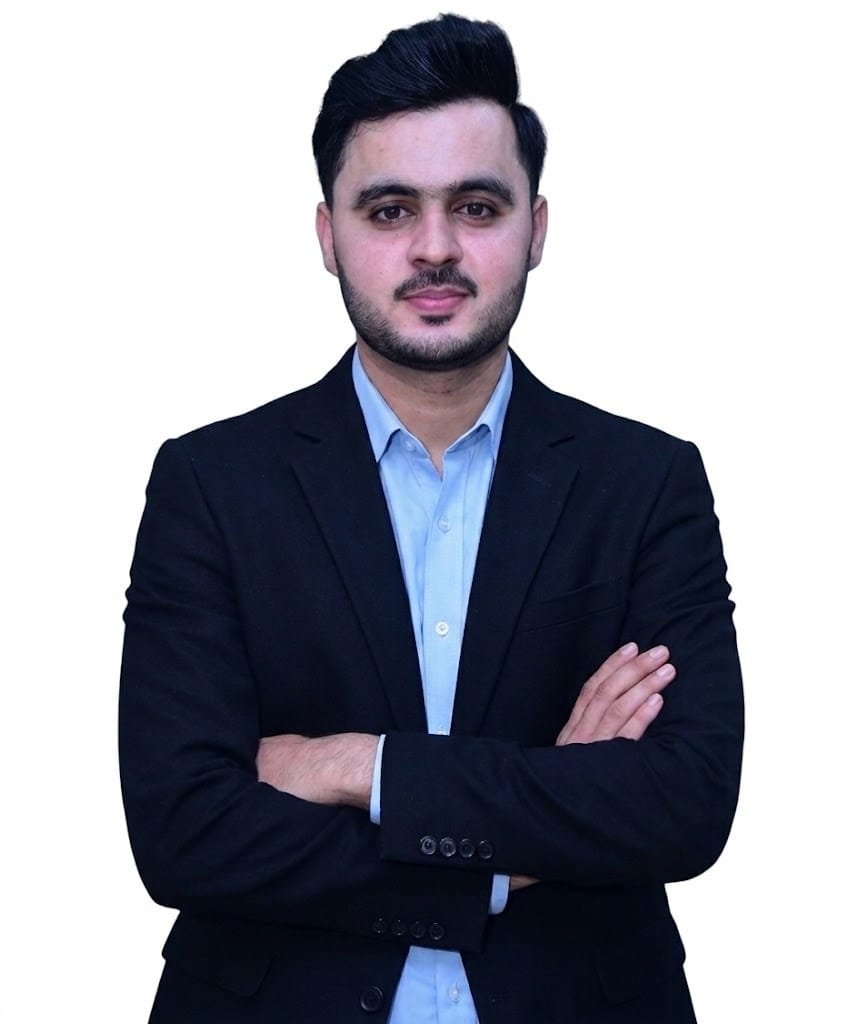
Muhammad Hamid
Founder — AI Finance Tracker
Muhammad Hamid is a web developer from Faisalabad, Pakistan, and the founder of AI Finance Tracker. He holds a Bachelor's degree (BS) from Riphah International University, Faisalabad, and built this platform after finding that global budgeting apps do not handle PKR, cash-first spending, or committee (BC) savings the way Pakistani households actually use them.
He writes these guides from hands-on experience building the product, not as a licensed financial advisor — read more on the About page.