
Committee (BC) System in Pakistan: How It Works and How to Do It Safely
Everything about the committee (BC) savings system — how it works, the real risks, and smart rules to protect your money.
What is a Committee (BC)?
A committee — commonly called BC, or beesi — is Pakistan's most widely used informal savings system. A group of people contribute a fixed amount every month, and each month one member receives the entire pool.
Ten people contributing Rs 10,000 each means Rs 100,000 is collected monthly, and one member takes it. The cycle runs ten months until everyone has had a turn. Nobody earns profit; nobody pays interest. Everyone gets back exactly what they put in, just at different times.
Millions of households run committees, and they persist for a reason worth taking seriously: they solve the discipline problem that defeats most savings accounts. When a group is depending on your payment, you find the money. When only your own future self is depending on it, you often do not.
How the Maths Works
- •Monthly contribution — the fixed amount each member pays
- •Pool — contribution multiplied by the number of members; this is what you receive on your turn
- •Duration in months — equal to the number of members
The critical insight, and the one most participants never articulate: your turn position determines what the committee is actually worth to you.
Take the first turn and you receive Rs 100,000 in month one, then pay it back over the following nine months. That is an interest-free loan.
Take the last turn and you have paid Rs 90,000 across nine months before receiving anything. You provided interest-free loans to nine other people, and inflation reduced the buying power of what you eventually collect.
Neither position is wrong. But you should know which one you are in, and price it accordingly when deciding whether to join.
Bidding Committees Are a Different Instrument
Some committees allocate turns by bidding: whoever accepts the largest discount takes the pool early, and the discount is shared among the rest.
Understand what this actually is. Accepting Rs 90,000 today instead of Rs 100,000, then repaying the full amount, is a cost paid for early access to money — which is functionally a return earned by the other members. Many scholars consider this problematic on riba grounds, whereas the plain rotating committee, where everyone receives exactly what they contribute, is generally regarded as permissible.
If this matters to you, ask a qualified scholar about the specific structure before joining rather than assuming all committees are equivalent. They are not.
The Real Risks
Committees run on trust, with no legal enforcement mechanism in practice. The recurring failure modes:
- •A member takes an early pool and stops paying. This is the classic committee collapse, and the loss falls on those who have not yet had their turn.
- •The organiser mismanages collections — money held too long, payouts delayed, or funds used personally with an intention to replace them.
- •No written record exists, so when a dispute arises there is nothing to resolve it against except conflicting memories.
- •Inflation erodes later turns. In a twenty-month committee, the final member collects money worth noticeably less than what they contributed.
- •Life happens. People lose jobs and genuinely cannot pay, without any bad intent at all.
Nine Rules for a Safe Committee
- 1.Know every member personally. Not friends of friends. If you cannot name all participants and where they work, do not join.
- 2.Keep it under twelve months. Longer committees multiply both default risk and inflation loss, and the correlation is not linear — a twenty-four-month committee is far more than twice as risky as a twelve-month one.
- 3.Write everything down. Members, amounts, turn order, and every payment received. A message to the group after each collection creates a simple public record that prevents most disputes.
- 4.Cap it at 20-25% of monthly income. Committee payments are non-negotiable obligations, unlike voluntary savings. Over-committing is the most common way a working budget breaks.
- 5.Check the organiser's track record. Someone who has completed five committees cleanly is a substantially different proposition from a first-time organiser.
- 6.Ask for a middle turn if you want balance. Early turns favour borrowers, late turns favour savers, the middle is neutral.
- 7.Never join two large committees simultaneously in the same period. The combined monthly obligation is where people get trapped.
- 8.Agree the default rule in advance. What happens if someone stops paying — do remaining members cover it, does the organiser, is there a guarantor? Deciding this while everyone is calm is far easier than deciding it during a crisis.
- 9.Track it digitally. The free Committee (BC) Manager in AI Finance Tracker shows your pool value, total paid, and exactly when your turn arrives.
If Someone Defaults
It happens. What to do:
- •Establish the reason first. Genuine hardship and deliberate default require completely different responses.
- •Offer a payment schedule for hardship cases. Most people repay when given a realistic path; almost nobody repays when pursued aggressively.
- •Escalate through the relationship, not through threats. Committees exist inside social networks, and social pressure is the only enforcement that actually functions.
- •Document what is owed in writing, agreed by both sides.
- •Accept the lesson if recovery fails, and be more careful about membership next time. Pursuing a small amount through the courts costs more than it recovers.
Committee vs Bank Savings
Honestly compared:
- •Discipline — committee wins decisively; the social obligation works where self-discipline does not
- •Safety — bank account wins decisively; no default risk
- •Profit — bank account wins; a committee returns exactly what you put in, nothing more
- •Access — bank account wins; committee money is locked until your turn
- •Lump sum access — committee wins; it is the only way most households obtain a large amount without borrowing
They are not competitors. The approach many households use sensibly: one trusted committee for forced discipline and lump-sum access, plus an emergency fund in a bank account for safety and liquidity. The committee is not an emergency fund and cannot serve as one — you cannot draw on it when the emergency arrives.
Final Thought
A committee is a financial product that happens to be arranged socially. The social framing is exactly why people skip the diligence they would apply to any bank product.
Know your turn position and what it costs you. Keep records. Cap the amount at what you could still pay during a bad month. Do that, and a committee remains what it has been for generations in Pakistan — one of the most effective savings mechanisms available to an ordinary household.
Get Weekly Finance Tips
Join 500+ Pakistanis getting practical money tips, savings strategies, and budget hacks every Monday.
500+
Subscribers
19
Articles
Weekly
Updates
About the Author
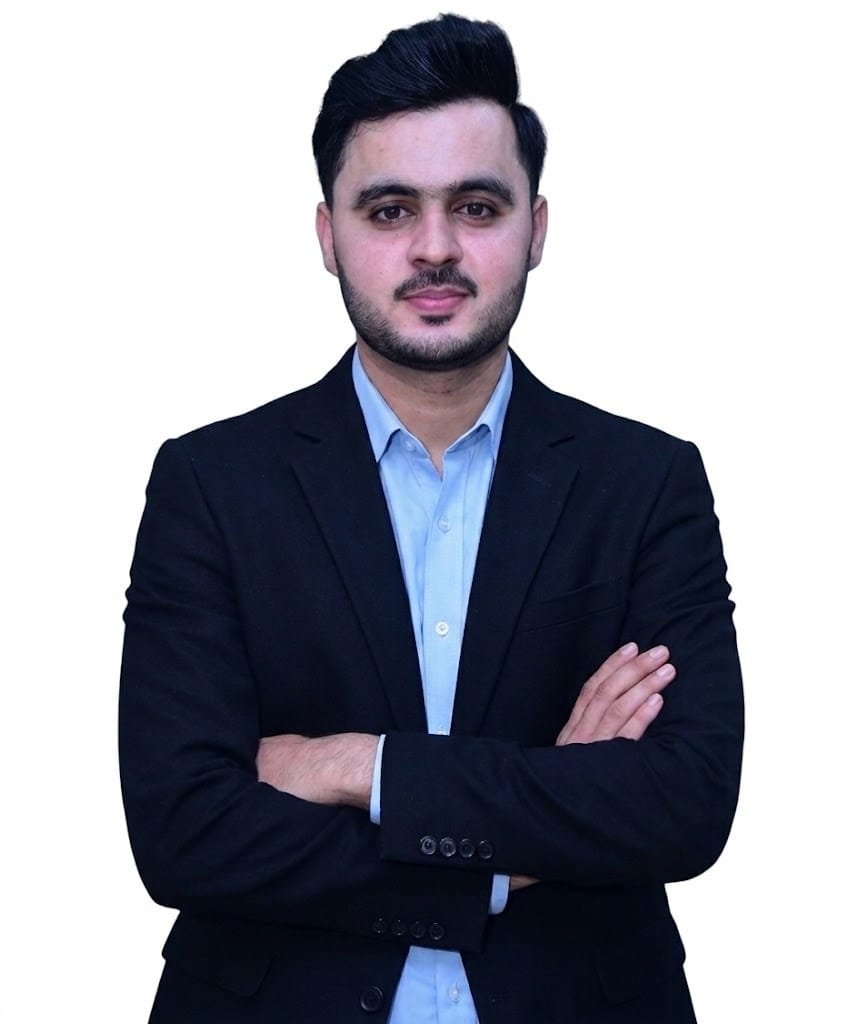
Muhammad Hamid
Founder — AI Finance Tracker
Muhammad Hamid is a web developer from Faisalabad, Pakistan, and the founder of AI Finance Tracker. He holds a Bachelor's degree (BS) from Riphah International University, Faisalabad, and built this platform after finding that global budgeting apps do not handle PKR, cash-first spending, or committee (BC) savings the way Pakistani households actually use them.
He writes these guides from hands-on experience building the product, not as a licensed financial advisor — read more on the About page.